Weekend Read: National Archives Sunshine Week Panel Focuses on Artificial Intelligence and Government Access

Federal agencies must prepare to integrate artificial intelligence and machine learning capabilities while continuing to ensure government transparency, according to the March 14, 2024 panel hosted by the National Archives and Records Administration (NARA), Artificial Intelligence: The Intersection of Public Access and Open Government. Expert panelists from NARA, The State Department, Department of Justice, and Library of Congress gathered at the William G. McGowan Theater at the National Archives during Sunshine Week—the annual celebration of open government—to discuss how artificial intelligence intersects with the Freedom of Information Act (FOIA) and access to public information.
Here are some big takeaways from the panel:
Eric Stein, Deputy Assistant Secretary for the Office of Global Information Services (A/GIS) and Senior Agency Official for Privacy at the State Department, outlined the agency’s goal to improve the experience of FOIA requesters and State Department employees processing those requests through its FOIA AI Pilot Project. According to Stein, the purpose of the project is to: 1) identify similar FOIA requests—both existing requests and as new requests are received, 2) utilize automation instead of a manual process to search State Department Central Records and Archives, and 3) improve the searching capabilities on the public website and overall customer experience.
Currently, the agency spends $65 Million on annual FOIA processing costs, employs 267 full-time FOIA staff to process requests, and has 20,000 pending FOIA cases with around 15,000 new requests received annually. “Manual processes are inefficient,” said Stein. “In certain cases, the Department was duplicating efforts at various stages of the FOIA process, sometimes re-processing documents from other cases.” With the help of the pilot-produced 360 FOIA Matching Tool, Stein stated that FOIA staff will be able to more effectively search FOIAXpress and State Department Reading Room results, ultimately cutting down on processing inefficiencies.
For additional resources on the State Department’s FOIA AI Pilot Project and Artificial Intelligence Strategy, see:
- June 23, 2023 National Security Archive Unredacted Post, Questions for the State Dept. After News it Launched a Pilot Program for Declassification Work, Anniversary of Rosenberg Execution for Espionage, and More: FRINFORMSUM 6/23/2023
- September 7, 2023 FOIA Advisory Committee Meeting State Department Presentation, Piloting Machine Learning for Freedom of Information Act (FOIA) Requests
- November 9, 2023 State Department Fact Sheet, The Department of State Unveils its First-Ever Enterprise Artificial Intelligence Strategy
Similarly, Bobak (Bobby) Talebian, Director of the Office of Information Policy (OIP) of Department of Justice, highlighted the DOJ’s commitment to “improving [FOIA] access and the requester experience using artificial intelligence.” Talebian reviewed the DOJ’s new “advanced search tool” on FOIA.gov released in October 2023, which utilizes a “combination of logic and machine learning functionality.”
Perhaps the most charged moment of the panel came during the question-and-answer session, of which National Security Archive Fellow and Washington Post FOIA Director Nate Jones was an audience member. Jones asked Stein about how the State Department’s AI integration into its FOIA processes might present an opportunity for agency proactive disclosure, specifically regarding provision (a)(2)(D)(ii)(II) of the FOIA Statute which requires agencies to release records to the public that have been requested three or more times. Stein responded that while the State Department “doesn’t actually keep track if a record gets requested three times” because the agency follows the “release to one release to all” policy, AI will help FOIA staff make associations they weren’t previously able to make, ultimately improving record tracking and release. Talebian expanded on Stein’s response, adding that “identifying proactive disclosures is very challenging for agencies to do…and there is a potential for AI to help augment what agencies are already doing at a human level that can help bridge the gaps.”
Another audience member pressed Talebian about the potential for DOJ proactive guidance in federal agency use of generative AI, remarking that “if it’s not DOJ [leading], who does the buck pass to?” Talebian skirted these remarks, stating that OIP exclusively manages FOIA processes, and could not comment on a more global use of AI within federal agencies.
Other general takeaways from the panel:
According to panelist Abigail Potter, founding member of the Library of Congress Labs team, data management—much more than data processing—will be one of the biggest challenges that agencies face when implementing AI capabilities. Additionally, issues of streamlining processes across all federal agencies—ranging in size, resources, and structure—as well as transparency to requesters are still yet to be solved. Gulam Shakir, NARA’s Chief Technology Officer, highlighted the imperative for agencies to think about the authenticity of their documents amidst generative AI so “the user can verify if it’s real or pulled out of thin air.”
Outside of those agencies represented on the panel, it remains unclear how other agencies will integrate AI and machine learning technologies into their FOIA processes—and how these changes will impact requesters.
National Security Archive Publishes New Digital Document Collection – U.S. Foreign Policy in the Carter Years, 1977-1981: Highest-Level Memos to the President

The National Security Archive, working with our partners at ProQuest, is publishing a new compilation of documents highlighting the most important national security issues faced by the Carter administration. The collection is 2,557 documents – totaling 8,904 pages – and includes all currently declassified daily memoranda from the secretary of state (or acting secretary) and the national security advisor that were used to brief the president.
One of the most interesting things about this latest Digital National Security Archive collection, U.S. Foreign Policy in the Carter Years, 1977-1981: Highest-Level Memos to the President, is that the memos from Secretary of State Cyrus Vance and National Security Advisor Zbigniew Brzezinski often include handwritten responses from President Carter. As such, they open a window into the unfiltered opinions of the president and his most senior aides about the issues they considered to be of special importance.
The collection also includes all available summaries and minutes of the Policy Review Committee and the Special Coordination Committee, two of the most important policy-formulating bodies of Carter’s presidency, shedding light on the views of other cabinet officers and agency heads who helped shape U.S. foreign policy. Access to these materials makes it possible to trace the evolution of the administration’s approaches to world affairs, to comprehend the rationales behind different policy options, to learn which agencies and officials supported which choices, and to understand how final decisions were reached.
A further benefit of the collection for researchers is that, unlike document collections focusing on a single country or topic, this compilation, if read chronologically, allows researchers to experience the unpredictable daily flow of events and crises exactly as Carter and his top advisers did. Alternatively, when isolated by topic, the documents let readers explore specific events as they unfolded and see how they fit within the context of the many other global issues facing the president.
The subjects in this collection cover a broad spectrum of world events during the Carter administration, including:
- relations with the Soviet Union, including the collapse of détente, the invasion of Afghanistan, the grain embargo, and the 1980 Olympic boycott;
- the Arab-Israeli dispute and the Camp David Accords;
- the Iranian revolution and hostage crisis;
- the formal establishment of diplomatic relations with China;
- Carter’s emphasis on linking foreign policy with human rights;
- efforts to mediate conflicts in Rhodesia, Angola, Zambia, and the Horn of Africa;
- conflicts in Southeast Asia, including the Cambodian-Vietnamese war and China’s invasion of Vietnam;
- tensions between Greece and Turkey over Cyprus;
- arms control issues, including the strategic arms limitation talks;
- consultations with NATO allies on theater nuclear weapons and the neutron bomb;
- the problem of the proliferation of nuclear weapons;
- U.S. trade negotiations with Canada and Mexico;
- the effort to persuade Congress to ratify the Panama Canal treaties despite public opposition;
- efforts to normalize relations with Cuba; and
- the revolutions in El Salvador, Nicaragua.
Online access to this Digital National Security Archive collection is available through a growing number of major libraries. Researchers can send a message via email to nsarchiv@gwu.edu to learn about the most recent and pending publications, to identify nearby libraries with access to DNSA, and to learn if the Archive has additional materials in its collections on topics of interest. If so, these documents can be viewed by making an appointment to visit the Archive’s reading room, the Smith Bagley Research Center, in Suite 701, Gelman Library, The George Washington University, 2130 H Street NW, Washington, D.C., 20037. The Archive’s phone number is 202-994-7000 and its fax number is 202-994-7005.
Year in Review: “Chile’s Coup at 50” Impact

The National Security Archive’s Chile Documentation Project is wrapping up a notable year, as project director Peter Kornbluh continues to draw significant media attention to the 50th anniversary of the U.S.-backed military takeover that brought General Augusto Pinochet to power.
Chilean media has interviewed Kornbluh for numerous productions, including ChileVision’s Operación Chile: Top Secret, which can be viewed by clicking on the hyperlink and features dozens of U.S. declassified records obtained by Kornbluh. The declassified records include recently obtained documents published in the new Chilean edition of Kornbluh’s Chilean non-fiction bestseller, “Pinochet Desclasificado.”
Chile’s Museo de la Memoria y DDHH also invited Korkbluh to speak about his bestselling book, and the discussion can be watched here.
Sep 4, 2023
Kornbluh also appeared on Vía X to discuss the CIA and Manuel Contreras, who was head of Chile’s secret police during the Pinochet regime. The video can be watched below.
VIA X
Sep 7, 2023
The recent death of Henry Kissinger also brought renewed attention to the darker side of his controversial tenure, including his role in the overthrow of Chilean democracy. Kornbluh recently appeared on NPR’s All Things Considered to discuss Kissinger’s role in Chile, noting, among other things, that “the historical record, I think, will outlive and has outlived him. And, you know, years from now, when the compliments that have been paid to him at this time have faded in memory, the verdict of history will still be there.” Listen to the entire podcast here
To learn more, visit the National Security Arcihve’s Chile Documentation Project.
Henry Kissinger: The Declassified Obituary and Other Resources
Henry Kissinger’s death renews global attention to the paper trail of secret documents recording his policy deliberations. Famous for initiatives including détente with the USSR, the opening to China, and Middle East shuttle diplomacy, the historical record also documents the darker side of Kissinger’s controversial tenure in power.
The National Security Archive has published a selection of declassified Henry Kissinger records – including memos, memcons, and “telcons” – to contribute to a balanced evaluation of his legacy at the White House and Department of State.

Documents included in the Archive’s latest posting shed light on Kissigner’s role in the overthrow of democracy and the rise of dictatorship in Chile; disdain for human rights and support for dirty, and even genocidal, wars abroad; secret bombing campaigns in Southeast Asia; and involvement in the Nixon administration’s criminal abuses, among them the secret wiretaps of his own top aides.
“Henry Kissinger’s insistence on recording practically every word he said, either to the presidents he served (without their knowledge that they were being taped) or the diplomats he cajoled, remains the gift that keeps on giving to diplomatic historians,” remarked Tom Blanton, director of the National Security Archive. “Kissinger’s aides later commented that he needed to keep track of which lie he told to whom. Kissinger tried to keep those documents under his own control. His deed of gift to the Library of Congress would have kept them closed until five years from now, but the Archive brought legal action and forced the opening of secret documents that show a decidedly mixed picture of Kissinger’s legacy, and enormous catastrophic costs to the peoples of Southeast Asia and Latin America.”

The Declassified Obituary is the latest in dozens of postings by Archive analysts examining Kissinger’s career. Other notable postings available on the National Security Archive website include:
- The Kissinger Telcons
- Archive Sues State Department Over Kissinger Telcons
- The Kissinger Telcons: New Documents Throw Light on Sensitive Ford and Kissinger Views
- The Kissinger Telcons: The Dobrynin File
- ”Dr. Kissinger, Mr. President”: More Kissinger Telcons and Nixon Tapes
- The Kissinger State Department Telcons
- Archive Hails Final Turnover of Kissinger Telcons
- Stopping Korea from Going Nuclear, Part I
- Stopping Korea from Going Nuclear, Part II
- Kissinger Told Soviet Envoy during 1973 Arab-Israeli War: “My Nightmare is a Victory for Either Side” – The Soviet Agreed
- Kissinger State Department Insisted that South Koreans Break Contract with French for Reprocessing Plant
- Kissinger’s ”Salted Peanuts” and the Iraq War
- Nixon, Kissinger, and the Madman Strategy during Vietnam War
- Kissinger Considered Attack on Cuba Following Angola Incursion
- Declassified Documents Show Henry Kissinger’s Major Role in the 1974 Initiative That Created the Nuclear Suppliers Group
- Kissinger to Ford: ”Smash” Rumsfeld
- Kissinger and Chile: The Declassified Record
- Kissinger Blocked Demarche on International Assassinations to Condor States
- CUBA and the U.S.
- ”We can bomb the bejesus out of them all over North Vietnam.”
- New Kissinger ’Telecons’ Reveal Chile Plotting at Highest Levels of U.S. Government
- Kissinger Conspired with Soviet Ambassador to Keep Secretary of State in the Dark
- Massive Collection of Formerly Secret and Top Secret Transcripts of Henry Kissinger’s Meetings with World Leaders Published On-Line
- New Documentary Reveals Secret U.S., Chinese Diplomacy Behind Nixon’s Trip
- Kissinger to The Argentine Generals in 1976: ”If There Are Things that Have to Be Done, You Should Do Them Quickly”
- Indonesia’s 1969 Takeover of West Papua Not by ”Free Choice”
- Nixon’s Trip to China
- Kissinger to Argentines On Dirty War: ”The Quicker You Succeed the Better”
- The Beijing-Washington Back-Channel and Henry Kissinger’s Secret Trip to China
- Secret Diplomacy to Normalize Relations with Cuba
- Nixon/Kissinger Saw India as ”Soviet Stooge” in 1971 South Asia Crisis
- Archive Hails Turnover of Kissinger Papers
Archive analysts have also written and contributed to numerous books on Kissinger, including:

Feb 1, 1999

May 15, 2015
Los Archivos Secretos del Los Estados Unidos Sobre Chile
(Catalonia Press: June 2023)

Sep 11, 2013

By John Dinges
Jun 1, 2005

Oct 13, 2014
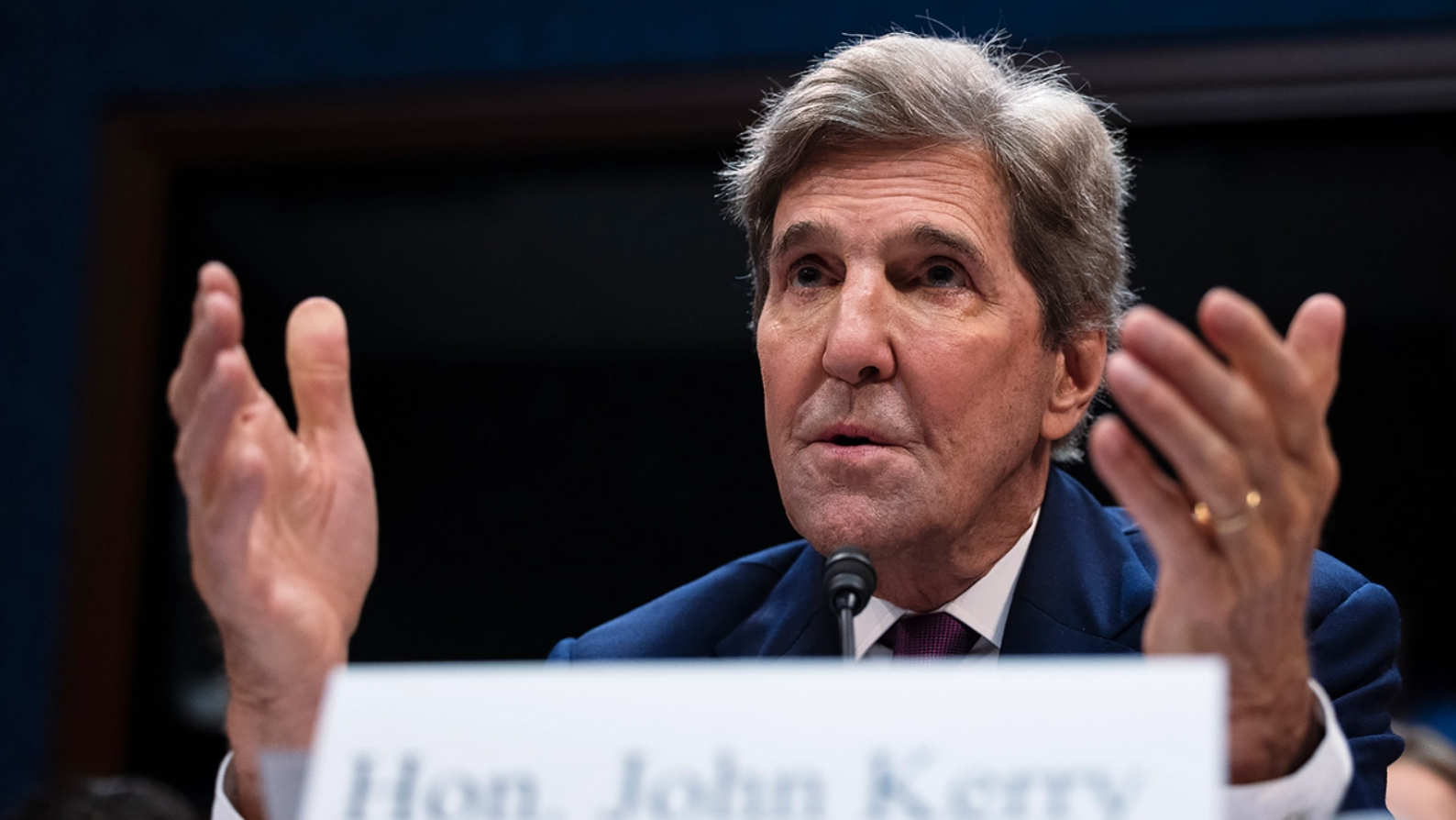
The United States will not pay climate reparations to developing countries under any circumstances, Special Presidential Climate Envoy John Kerry stated in his July 13, 2023, testimony before the House Foreign Affairs Oversight and Accountability Subcommittee during a hearing on the State Department’s climate agenda. Kerry’s testimony, scheduled just days before a visit to China for another round of bilateral talks on climate negotiations, comes amidst international disputes over the landmark “Loss and Damage” Fund, an international finance mechanism that would provide assistance to nations most vulnerable to climate change that was established at the November 2022 Conference of Parties (COP) 27 in Sharm el-Sheikh, Egypt.[1]
Kerry’s July 13 testimony is the latest indicator that the U.S. Government will not compensate developing nations for environmental damages caused by developed ones. Previous indicators that add context to Kerry’s recent comments are outlined in the National Security Archive’s July 6, 2023, briefing book, 50 Years of U.S. Resistance to Environmental Reparations. This posting captures nearly half a century’s worth of documentation from U.S. policymakers on how developed countries could avoid financially supporting developing countries—despite being the largest greenhouse gas emitters.
The Archive’s posting features a range of declassified intelligence notes, memorandums of conversation, and cables from the Nixon to Obama Administration, underscoring the U.S. government’s long opposition to environmental compensation measures for developing countries. Beginning with the 1972 United Nations Conference on the Human Environment (UNCHE) in Stockholm, Sweden, the posting tracks several State Department, Department of Energy, and high-ranking White House officials and their concerns that developing countries would continue to link issues related to development and environmental degradation “for years to come.”
The posting notes how the United States consistently maintained the hardline that developing countries make reciprocal commitments towards emissions targets. The U.S. held this stance in the 1972 UNCHE, the 1992 Rio Conference, and the 2015 Paris Climate Accords, even though developing countries contribute only a fraction of the greenhouse gases that developed countries do. The U.S. government also emphasized scientific research, market mechanisms, and regulations to reduce greenhouse gas, “all while ensuring the most flexible emissions commitments” for industrialized nations.
Key documents published in the briefing book include:
- A May 31, 1972, State Department Bureau of Intelligence Research Intelligence Note, Stockholm Environment Conference: African Position, assessing “increasing African militancy” on environment and ecological issues;
- A May 1, 1992, White House Memorandum of Conversation from a meeting between President George H. W. Bush and Japan’s Minister of Trade and Industry Kozo Watanabe, in which Bush makes clear that he will not sacrifice the U.S. economy for the sake of environmental compensatory calls from developing nations; and
- A September 24, 2015, State Department Cable outlining the U.S. stance on finance mechanisms ahead of 2015’s COP21 in Paris; plus many more.
National Security Archive staff have filed several FOIA requests related to Kerry’s visit to China, as well as for a May 2022 email referenced by Representative Bill Huizenga (R-MI) during the July 13 hearing, in which the State Department’s Director of Climate Finance suggested a call or meeting to update Kerry on the FY2022-2023 budget, “focusing on all the elements we can’t put on paper.”
Huizenga also inquired about a FOIA request submitted by his staff concerning the FY2022-2023 budget during the hearing, which the State Department had estimated it would take 3 years to answer. Kerry responded that he couldn’t “imagine any FOIA [request] that would take that long” to process. When pressed further by Huizenga, however, Kerry agreed to communicate with the State Department’s FOIA office to address the request “as soon as possible.”
It remains unclear how the U.S. government will navigate its contributions to the Loss and Damage fund, but Kerry’s opposition to climate reparations appear to be in line with longstanding U.S. resistance to environmental liability.
For more context on climate cooperation between the United States and China in the wake of Kerry’s most recent bilateral talks in Beijing, see Archive posting The U.S. and Climate Change: Washington’s See-Saw on Global Leadership.
[1] Unlike a reparations program, the Loss and Damage fund makes no mention of developed countries’ liability or responsibility to ‘foot the bill’ for climate damages. Instead, the fund relies on voluntary commitments from countries, although the specific parameters of the funding mechanism remain uncertain heading into November’s COP28 in Dubai, United Arab Emirates.

On March 17th of this year, State Department spokesperson Ned Price was asked by Pakistani news media about unconfirmed reports of a U.S. drone strike in the Pakistani village of Zangara, within the South Waziristan region. Price, who has since resigned from his position, neither confirmed nor denied the strike, stating “we’ve seen reports that Pakistani security forces conducted counterterrorism operations in South Waziristan on March 15. We refer you to the Government of Pakistan for any additional information.” To date, no new information has been released about the potential strike, but, if it were confirmed, it would be the first known U.S. strike in Pakistan since 2018.
To help add context to what a potential resumption of U.S. drone activity in Pakistan could mean, this posting contains a selection of documents dating from 2010 through 2013 that detail the range of issues created by the drone strikes since they began in 2004. The declassified documents appear in the recent Digital National Security Archive collection, Afghanistan War and the United States, 1998-2017, and were released in response to the Archive’s Freedom of Information Act (FOIA) requests.
A confidential declassified January 9, 2010 cable from the Defense Department to the Defense Intelligence Agency summarized two opinion pieces by an unnamed Pakistani research scholar in The Nation, an English-language daily newspaper based in Lahore. The op-eds, according to the cable, defended U.S. drone strikes in the country, claiming they were supported by Punjabi people, who reportedly saw them as a cause for “joy.” The writer also alleged that the Pakistani government subjugated the Punjabi people to provide a base to harbor terrorists. Similar arguments were promoted by scholars such as Neha Ansari.
The larger picture was more complicated. On January 22, 2010, a confidential and highly-excised Defense cable provided the Defense Intelligence Agency with a summary of front-page stories in the Daily Times and The Frontier Post. The summary reported that the Pakistani military was engaged in military exercises to shoot down four Pakistani drones, with an unnamed retired general stating that they did not want to “spoil relations with the U.S.” as a result of the exercises.
Unease with U.S. drones in Pakistan is further explored in a February 2010 Congressional Research Report by John Rollins, entitled “Al Qaeda and Affiliates: Historical Perspective, Global Presence, and Implications for U.S. Policy.” On pages 9 to 10 of the report, Rollins argued that U.S. policy options to fight al-Qaeda in Pakistan were limited because “anti-American sentiment is…at peak levels within a broad spectrum of Pakistani society.” Rollins noted that there were perceptions that the U.S. was fighting against Islam, that the U.S. did not care about Pakistani democracy, and that drone strikes, and suspected covert operations, were a violation of the country’s national sovereignty. Rollins reported that while there was an increase in U.S. economic and development assistance to Pakistan, U.S. troops still could not officially operate within the country. He added that Pakistan’s security environment and distrust of the U.S. made it “extremely difficult for U.S. officials to operate effectively there.” This assessment is reinforced by a public opinion survey released by the Meridian International Center and Gallup in 2011. It estimated that in 2010, only 18% of Pakistanis approved of U.S. leadership.
Declassified Defense Department documents from 2012 and 2013 discussing responses to the drone strikes by terrorist organizations add another layer of complexity to the issue. A secret, heavily-excised August 7, 2012 cable relayed intelligence about a meeting two-months prior in Miram Shah, Pakistan between senior leaders from al-Qaeda, the Pakistani Taliban, the Afghan Taliban, the Haqqani Network, and other terrorist organizations. These leaders discussed how to target U.S. soldiers in Afghanistan with suicide bombings, and other attacks, in retaliation for U.S. drone strikes that had killed Taliban fighters.
A secret June 27, 2013 Defense Department cable, which provided insights about Pakistan after the country’s May 2013 elections, goes further, stating, “drones do cause collateral damage and fear.” This statement was couched by the claim that F-16s operated by the Pakistani military and terrorist actions were more damaging than U.S. drone attacks. Despite this claim, the over 560 drone strikes during the Obama administration killed scores of civilians in Pakistan, Somalia, and Yemen, according to Bureau of Investigative Journalism estimates.
The declassified documents in this posting are significant because of the ongoing official secrecy surrounding the U.S. drone war in Pakistan – despite widespread reporting on the program. Reports from as early as 2009 note that the U.S. drone strikes in Pakistan were conducted by operators for the Central Intelligence Agency’s Special Activities Division, which “piloted” U.S. Air Force drones. Yet the legal memorandums outlining justifications for CIA use of drones and the summary strike data, for U.S. drone warfare in Pakistan and elsewhere, have remained classified.
Notably, the ACLU filed a FOIA request in 2010 for information about the program with the CIA. The Agency issued a “glomar” response to the request, refusing to confirm or deny the existence of documents because “the existence or nonexistence of requested records is currently and properly classified.”. The ACLU filed suit, but was ultimately rejected by D.C. District Court, which ruled that the documents relating to the program were “properly classified.”
State Department Launches AI Pilot Program for FOIA Processing
Federal News Network reports that the State Department is “experimenting with automation” to improve its FOIA work. Of specific interest is a pilot program that has “trained a machine learning model on years of humans reviewing and declassifying records” to improve the agency’s declassification processing. “The model is now as accurate as human FOIA professionals about 97-99% of the time,” and has saved the agency, according to Deputy Assistant Secretary for the Office of Global Information Services Eric Stein, half a year’s worth of work.
This is good news. Embracing machine learning will be critical for agencies as their FOIA backlogs grow and incoming records requests deal with ever-larger pools of electronic responsive records. However, the article begs several important questions.
One critical question for the State Department is whether the AI pilot is helping FOIA officers search for responsive records, or is it performing redactions after a document has been deemed responsive to a request? Another key question is at what stage in a FOIA request does a machine model base its learning? Is it based on responses that have been appealed and litigated, or primarily on initial determinations? Because agencies release more information on appeal roughly a third of the time, and because an independent, inter-agency body overrules agency declassification decisions 70% of the time, the stage during the administrative process that machine learning is based on is an extremely important one. Hopefully the State Department will provide more details soon – and engage requesters in the process.
Sign Up
Want to stay on top of the latest FOIA news? Click here to sign up for our FRINFORMSUM (Freedom of Information Summary) email newsletter.
Daniel Ellsberg and the Pentagon Papers
The recent death of Daniel Ellsberg, whistleblower and leaker of the Pentagon Papers, closes an extraordinary chapter in American history, and begs the question of how far the nation has come in its treatment of whistleblowers and its ability to rein in the national security apparatus.
The Pentagon Papers, officially titled United States-Vietnam Relations, 1945-1967, was commissioned by Defense Secretary Robert S. McNamara to help document the Vietnam War. The voluminous study was compiled by 36 analysts, including then-Rand Corporation analyst Ellsberg, who leaked portions of the report to the New York Times in 1971. The disclosure caused a furor, enraged the Nixon administration (and prompted the establishment of the “White House Plumbers”), and led to a seminal Supreme Court ruling on the freedom of the press.
Despite the attention the leak garnered, and the end of the Vietnam War in 1975, much of the report stayed secret. The National Security Archive filed both FOIA and Mandatory Declassification Review (MDR) requests for the report in the 1980s, 1990s, and 2000s.
Yet the full version of the Pentagon Papers, nearly 7,000 declassified pages, wasn’t made public until the 40th anniversary of the 1971 leak, when the National Archives and Records Administration (NARA) and its National Declassification Center (NDC) released the complete version, minus eleven words the government maintained must stay secret.
The National Security Archive’s John Prados commemorated the 2011 release by publishing declassified records that were “central to the larger story of the Pentagon Papers.” These records include, but are not limited to, a set of the legal briefs that were filed with the Supreme Court, and declassified text that was compiled by the Department of State’s Bureau of Intelligence and Research (INR). The INR’s “study had a stature similar to that of the Pentagon Papers and deserves to be examined alongside it. The State Department Papers never leaked and thus are hardly known. They will be completely new to most readers.”
Julius and Ethel Rosenberg – Executed 70 Years Ago as Spies
On June 19, 1953, Julius and Ethel Rosenberg were executed after being convicted of espionage for the Soviet Union. The grand jury testimonies from the trial, one of the most sensational flash points of the early Cold War, have been a focus of Archive release efforts for years.
In 2008, the Archive and leading U.S. historical associations won the opening of the majority of witness statements before the grand jury, including those of Julius and Ethel, which collectively “cast significant doubt on the key prosecution charge used to convict Ethel Rosenberg at the trial and sentence her to death.” The notable exception from the release was the grand jury testimony of Ethel’s brother, David Greenglass.
Greenglass objected to the release of his testimony in 2008, seven years after being paid to sit with reporter Sam Roberts, who was then working on a book that would be titled, “The Brother: The Untold Story of Atomic Spy David Greenglass and How He Sent His Sister, Ethel Rosenberg, to the Electric Chair.” During the paid sessions, Greenglass admitted that, “he had lied on the witness stand about the single most incriminating evidence against his sister — that she typed his handwritten notes for delivery to the Soviets. Without that testimony, Ethel Rosenberg might well have never been convicted, much less executed.”
In 2015 the Archive, together with the historical associations, finally won a petition for the release of David Greenglass’s testimony. In the 2015 ruling, U.S. District Court Judge Alvin K. Hellerstein dismissed the Government’s argument that the release would rekindle apathy towards the Greenglass family, and found, “The requested records are critical pieces of an important moment in our nation’s history. The time for the public to guess what they contain should end.” The testimony released in 2015 suggested Greenglass did in fact commit perjury on the witness stand.
Read the Greenglass testimony here. More information about the lawsuit can be found on our website.

In Brief
- Public Interest Declassification Board (PIDB) member Ezra Cohen recently joined Nonproliferation Policy Education Center (NPEC) director Henry Sokolski to discuss overclassification. Discussion points were drawn from NPEC’s recent paper, “Over-classification: How Bad Is It, What’s the Fix?” The video broadcast can be found on YouTube.
Declassification Provisions of the 2024 Intel Authorization Act
Senator Ron Wyden (D-OR) is touting the 2024 Intelligence Authorization Act (IAA), which unanimously passed the Senate Intelligence Committee this week, as “historic declassification reform legislation” that will help fix “the country’s broken classification and declassification system.” Wyden’s press release notes that the IAA includes provisions that were initially introduced with Senator Jerry Moran (R-KS) in the Declassification Reform Act of 2020, and which were subsequently included in the Classification Reform Act of 2023.
The text of 2024 IAA has not been made public, but, if it includes the main provisions of the Classification Reform Act (CRA), it deserves careful scrutiny. The CRA mandates, among other things, the establishment of an Executive Agent for Classification and Declassification, with the Director of National Intelligence serving as said Agent. The Agent would be responsible for: promoting programs to “ensure that declassification activities keep pace with classification activities;” promoting “a federated classification system” that incorporates automatic declassification and consistent declassification review across agencies; and working “with the Director of the Office of Management and Budget in developing a line item for classification and declassification in each budget of the President that is submitted for a fiscal year under section 1105(a) of title 31, United States Code.”
The selection of the DNI as the Agent could be particularly problematic, depending on who fills that role. An alternate option for Executive Agent could be the director of the Information Security Oversight Office (ISOO), which is currently a part of the National Archives and Records Administration (NARA). Some have suggested that ISOO should become a part of the DNI itself, but a more diplomatic move might be to make ISOO its own, independent office. ISOO also already reports to the president annually on the classification system, including its cost, making it a natural fit for the Executive Agent role.
The Classification Reform Act has other potential upshots and downsides. It explicitly adds ISOO to the text of the National Security Act; includes potentially good language on not classifying information if there is any doubt it should be classified (as well as declassifying if there is any doubt the record needs continued protection); and requires considering public interest when determining harm to national security. Controversially, the bill also provides “for no more than two levels of classification,” which ostensibly means eliminating the Confidential category, potentially leading to lower-level information being classified as Secret rather than declassified.
It is likely that much of the CRA language is now part of the IAA. But without the relevant text of the IAA, there are more questions than answers about its benefit to the classification system.
Sign Up
Want to stay on top of the latest FOIA news? Click here to sign up for our FRINFORMSUM (Freedom of Information Summary) email newsletter.
Treasury Dept. “Still Interested” Letters Demand Signature Response
The National Security Archive has recently received dozens of “still interested” letters from the Treasury Department’s Office of Terrorism of Financial Intelligence that are more problematic than most. (“Still interested” letters are sent by agencies and threaten to close a FOIA request, even if it abides by all the rules of a perfected FOIA request and may have been pending for years, if a requester doesn’t reply affirmatively within 30 days – or sometimes less. The Archive once received a 7-day response timeframe for a request we had been waiting for 15 years to be processed.) Treasury is now requiring that FOIA requesters manually sign the letters and return them, and only upon receipt of signature will it continue to process the request.
This arbitrary requirement violates Department of Justice Office of Information Policy (OIP) guidance, which requires, among other things, that requesters are not disadvantaged by the letters. OIP guidance also states that agencies must limit the use of “still letters” and provide at least 30 days for a requester to respond.
While the use of these letters continues (presumably to help agencies cut down on their FOIA backlog), nothing in the FOIA statute itself suggests an agency may close a request if it does not receive a response from a “still interested” letter. Aside from settling possible fee disagreements, the statute does not require any further action on a requester’s part after a request has been submitted.
The Archive’s 2021 Sunshine Week audit, “Still Interested” Letters Add Insult to Injury of Long-Ignored FOIA Requests, examines the issue in greater detail and can be read on our website.
FOIA Advisory Subcommittee Needs Your Feedback
The FOIA Advisory Committee’s Modernization Subcommittee is seeking public feedback on its draft model determination letter. The letter, which was introduced during the most recent FOIA Advisory Committee meeting, is designed to be a template for agencies when providing initial and final determination responses, and would help standardize disparate agency responses.
The Archive will be submitting comments on the letter, which is already good, including recommending that determination letters include information on what fees are waived for different requester categories when an agency doesn’t meet its statutorily-mandated deadlines, and informing requesters that there is a 25-year sunset to FOIA Exemption 5’s “deliberative process” privilege when that exemption is invoked.
Comments may be submitted through the Office of Government Information Services (OGIS) Public Comments Form, and will be made public if they comply with OGIS’s Public Comment Policy.
The June 8, 2023, full FOIA Advisory Committee meeting, and all of the meeting materials, can be found here.

The National Security Archive, working with our partners at ProQuest, is publishing a new compilation of documents on U.S. policy toward Iraq. The 2,179 -document collection, Targeting Iraq, Part II: War and Occupation, 2004-2011, is relevant for researchers studying a range of issues, including:
- The history of Iraq after the 2003 U.S. invasion;
- The creation of a new Iraqi governing system and Iraqi elections;
- Intelligence and national security;
- U.S. policy towards the Middle East;
- Al-Qaeda in Iraq; and
- U.S. counterterrorism policy.
The collection totals 77,706 pages and begins with the closure of the Coalition Provisional Authority, which was established by the United States following the overthrow of Saddam Hussein, and ends with the withdrawal of all American combat troops in 2011 under the terms authorized by President George W. Bush. The documents spotlight a range of key issues across the intervening years, including efforts to restore a functioning economy and reestablish security in Iraq, American attempts to suppress violence motivated by U.S. presence in the country, U.S. influence in Iraq’s political and economic decision-making, oil legislation, and much more.
The documents, which were obtained by submitting hundreds of Freedom of Information Act (FOIA) and Mandatory Declassification Review (MDR) requests, also address military strategy, human rights issues and prisoner abuse, corruption, and contractor malfeasance and the conduct of private security firms – including Blackwater. Some of the specific events documented in the collection include the execution of Saddam Hussein for crimes against humanity, the ramifications of U.S. torture of Abu Ghraib detainees, and American killing of Iraqi civilians in Haditha, at al-Mahmudiyah, and Baghdad’s Nisour Square.
The vast majority of the documents in the new set come from the U.S. Armed Forces, the Special Inspector General for Iraq Reconstruction, Coalition forces, United States embassies, as well as the Department of Defense. Others originate from the White House, Congress, international organizations, and non-U.S. governments.
Targeting Iraq, Part II expands on an earlier collection, Targeting Iraq, Part I: Planning, Invasion, and Occupation, 1997-2004, and complements and supplements information in both of the Digital National Security Archive’s collections on Donald Rumsfeld’s Snowflakes. The extensive set is constrained by similar issues as with the sets mentioned above: the U.S. government’s persistent and unwavering overclassification on foreign, military, and intelligence policy; the laboriously slow processing of FOIA requests combined with the increasing number of documents born classified; and the inability of many federal agencies to efficiently process and declassify electronic records. Also worthy of note are delays and complications in attempting to access documents containing White House equities or that are presidential records; these records face additional hurdles and delays, in no small part because presidential records do not become subject to the FOIA until five years after the end of an administration.
Online access to this Digital National Security Archive collection is available through a growing number of major libraries. Related records are available on the Archive’s website as “Electronic Briefing Books” that are regularly updated as additional material is declassified. Researchers should check the Archive’s website, http://www.nsarchive.org, to find the latest information. They can also send a message via email to nsarchiv@gwu.edu to learn about the most recent (or pending) publications, to identify nearby libraries with subscriptions to DNSA, and to learn if the Archive has additional materials in its collections on topics of interest.
Declassified Documents Describe China-Taliban Relations and Fears About Uighur Guerillas
Recent allegations that the Uighurs, a Turkic ethnic group native to the Xinjiang Uygur Autonomous Region in the Northwest region of China, are an “attractive constituency” for terrorist groups like Islamic State – Khorasan Province, warrant careful scrutiny, particularly at a time of increased U.S.-Chinese tension. The Chinese government strongly opposes the political movement that seeks an independent Uighur nation-state, in part due to purported concerns about political violence, and Beijing has been accused of violating Uighur human rights. The U.S., however, has indicated its support of the Uighur community in recent years. In January 2023, President Biden stated that ethnic minority communities, such as the Uighurs, continue to face “intimidation, violence, and unequal protection under the law,” a sentiment previously reflected in U.S. press briefings and other statements since at least March 2019.
The U.S. stance on the Uighur issue has evolved across recent presidential administrations, and the assessments found in the declassified documents featured in today’s post, which were all released under the Freedom of Information Act (FOIA), reflect those of the first George W. Bush administration. These documents are a selection from the new Digital National Security Archive collection, Afghanistan War and the United States, 1998-2017, which was published in December of last year. The five documents examined in this post primarily detail: friendly Chinese relations with the Taliban in the early 2000s in an attempt to secure assurances about Uighur guerrillas in Afghanistan; a U.S. assessment of threat posed by said guerrillas; and U.S. complicity in allowing Chinese officials to interrogate Uighur detainees held at Camp X-Ray, which was housed at Guantanamo.

In March 5, 2001, the State Department’s Bureau of Intelligence and Research issued a one-page secret intelligence brief noting a meeting between Chinese diplomats and Taliban Foreign Minister Wakil Ahmed Muttawakil. The discussion included recommendations from a Chinese fact-finding mission, including assurances that so-called “Xinjiang dissidents” were being trained to fight anti-Taliban groups inside Afghanistan, and not threatening China. The unnamed U.S. diplomat noted that such meetings were indicative of broadening engagement between the Taliban and China, and pointed to evidence of increased commercial contacts. Similarly, then-U.S. Ambassador to China, Joseph W. Prueher, stated in a March 9, 2001, confidential cable to Secretary of State Colin Powell that China’s “beautiful friendship” with the Taliban was rooted in a desire for “stability” and a resolution to the Afghanistan civil war. In his cable, Prueher examined why the Chinese accepted Taliban rule and cited increasing academic and official exchanges. When it came to the Uighurs, he noted Chinese fears that an unfriendly Taliban government could cause “mischief” in the Xinjiang region by supporting those termed “Uighur separatists,” and China’s hope that the Taliban would not support such guerrillas. However, he argued that although China would not formally recognize the rule of the Taliban, China was impressed by “performance and pledges” of the Taliban.
On September 18, 2001, Clark T. Randt, Jr., Prueher’s successor as U.S. Ambassador to China, reported in a confidential cable to Secretary Powell, on a meeting with an ambassador to China who predicted possible Chinese support of the U.S. War on Terror. He also noted that “growing links” between Taliban and China might complicate such support. Part of this cable described Chinese provision of economic cooperation and development aid to the Taliban to accomplish political and economic goals. This included Chinese attempts at convincing the Taliban to “not supply arms and training to separatists in Xinjiang.” These guerrillas were later described as a non-threat to the U.S. A heavily-excised cable sent on September 20 from the U.S. Air Force Office of Special Investigations summarizing the terrorist threat facing U.S. military forces in southern Kyrgyzstan stated this directly. On page three, it noted that Uighurs had proven “capable” in assaults, including against Chinese people, with the attack on an official Chinese delegation from Xinjiang at the Dostuk Hotel in Bishkek, Kyrgyzstan in May 2000. Despite this, the document said that Uighurs did not “threaten US interests in [the] region” even though some fought for the religious extremist group, Islamic Movement of Uzbekistan (IMU).
This perceived lack of threat from the Uighurs could partially explain why the U.S. government granted Chinese officials access to Uighurs imprisoned in Camp X-Ray, which was a temporary detention facility inside the Guantanamo Bay detention camp that had been used by the U.S. government to house Cuban exiles in the mid-1990s. A remarkable passage buried within an unclassified October 2009 Department of Justice Inspector General report, “A Review of the FBI’s Involvement in and Observations of Detainee Interrogations in Guantanamo Bay, Afghanistan, and Iraq,” states that “several Uighur detainees” were subjected to cruel treatment such as sleep deprivation and “disruption” at Camp X-Ray, including food deprivation. These prisoners were either interrogated by Chinese officials or by U.S. personnel at the “behest of Chinese interrogators.” (See pages 183-184.) The lingering questions surrounding the interrogation of the Uighur detainees at Camp X-Ray deserve further scrutiny now that the Biden administration is expressing support of the Uighurs.
For related documents, see our previous blog post, “Declassified U.S. Intelligence Documents Describe Taliban History with Illicit Narcotics Trade,” the Archive’s Afghanistan Project, and the Archive’s China Documentation Project.

 UNREDACTED
